A step-by-step preparedness system for your household — the plan, the kit list, the water and food strategy and the skills, laid out in the order you should actually do them. No panic. No prepper theatre. Just the work, sequenced.
Start Your Survival PlanInstant digital access — begin tonightA short walkthrough — what preparedness actually involves, and what it doesn't.
Preparedness gets sold as a shopping list. So people buy a water filter, a bag of rice and a flashlight, feel briefly better, and stop — with no idea what order anything goes in or what they're still missing.
It's what happens when a subject this large gets handed to you as tips instead of an order of operations. Preparedness is boring and sequential when it's done properly. That's the whole reason it works — and the reason most people never get past the shopping.
SurvivalBeacon is the sequence. Four stages, in order, with a checklist at the end of each so you can see what you've actually finished.
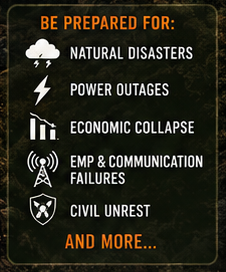
The events that actually disrupt households are usually mundane — a multi-day power cut, a storm that closes the roads, a burst main, a job loss. The same groundwork covers the rarer scenarios, so start where the odds are.

Each stage ends with a checklist. You don't move on until the one you're on is genuinely finished — that constraint is what stops this becoming another folder of unread PDFs.
The window that matters most and the one almost nobody plans for properly. Light, water, heat, food, information and a written household plan that works whether or not you're home when it starts.
How much water a household actually needs per day and how to store it safely. Then a pantry built from food you already eat, rotated so nothing is quietly expiring in the dark.
One bag per person, packed for a specific journey rather than a fantasy. Weight limits, documents, medication, the things people always forget, and how to test it before you need it.
The practical competencies — fire, shelter, basic repair, navigation without a phone, and communication when networks are down. Each one with a drill you can practise on an ordinary weekend.
Everything is digital and available the moment you're in. Nothing is drip-fed and nothing ships.
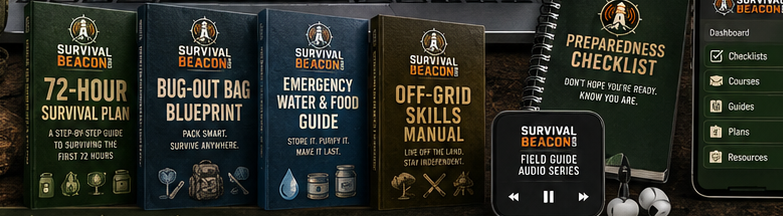
The core manual. Stage one in full, hour by hour, with the household plan template you fill in and put on the fridge.
A real packing list with weights, a documents section, and the test-run that tells you whether your bag is actually carryable.
Storage, purification, quantities per person per day, and a rotation system that runs itself once it's set up.
Fire, shelter, navigation, basic repair and communication — each with a weekend drill so it becomes something you've done, not read.
One page per stage. Tick it, date it, pin it up. This is the part that makes progress visible to everyone in the house.
The whole system narrated, for the drive or the workshop. Same material, hands-free.
"The power went out for five days last winter and it was the first time I wasn't scrambling. We had light, we had water, and the kids thought it was an adventure instead of a crisis."
"The checklists are what did it for me. Clear, practical, and I could finally see what was actually finished versus what I'd just been thinking about."
"I'd bought gear for years without a plan behind any of it. This put it in an order. Best thing I've done for my family's peace of mind."
Individual experiences vary and depend on the work put in. These describe personal impressions of the material and are not outcomes you should expect.
One payment. Instant access. No subscription.
Read it, work through stage one, and if you decide it isn't for you, email inside 30 days and we'll refund it. You don't have to justify yourself. The only thing we ask is that you actually open it first.
No, and that's deliberate. Fear sells preparedness badly and produces panic-buying instead of readiness. This is written as household admin: unglamorous, sequential, and finishable.
No. It's written for ordinary homes and flats. Where something costs money the guide says what it costs, what the cheaper version is, and whether it's worth doing at all right now.
No. Nothing in here is weapons instruction. It covers household preparedness, supplies, skills and planning.
No. First aid is discussed as a preparedness category — what to keep and where — not as clinical guidance. For anything medical, speak to a qualified professional. Keep your own prescriptions current with your doctor.
Stage one is a weekend for most households. The full sequence is designed to run over a couple of months at a sustainable pace, because things done slowly tend to still be in place a year later.
Digital. Guides and checklists as PDF, the field guide as audio. Instant access after checkout, readable on any device. Nothing ships.
The best time to do this was a quiet weekend last year. The second best is tonight, and stage one takes an evening.